
Overmolding is an efficient way to combine metal strength with plastic functionality to produce cost-efficient, durable standing seam roof clips such as the Kalzip E clip. By applying a thermoplastic layer onto a metal insert, overmolding technology improves mechanical performance, insulation, and appearance while reducing total production cost.
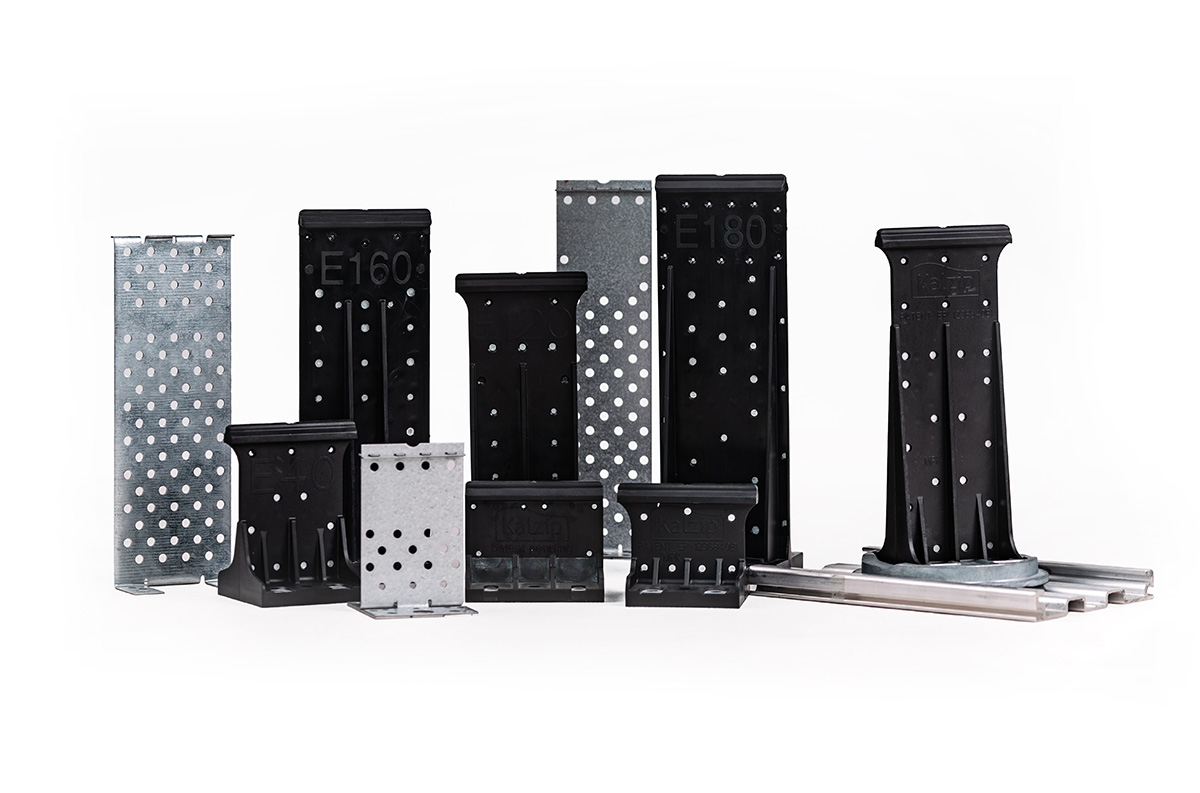
In this article we describe, how
What is overmolding?
Overmolding is an injection molding process where a base component – typically a metal or rigid plastic insert – is placed into a mold and covered with a second material, usually a thermoplastic or elastomer. The result is a single, integrated metal–plastic hybrid part.
In the case of the Kalzip E clip, a formed steel frame is overmolded with polyamide. This overmolding technology combines the mechanical strength of metal with the thermal insulation, corrosion protection, and design flexibility of plastic.
We can combine the advantages of two materials with overmolding
Product designers often aim to use the advantages of several materials at the same time to achieve superior product quality at a reasonable cost. In many cases, this is the only way to ensure that both high quality and good functional properties are inherent in the product.
For example, in the case of threaded joints, the use of metal nuts and bolts is the most advantageous solution. However, if they only appear as inserts in the product, the other parts can be made from thermoplastics or elastomers, which are lighter, more cost-efficient and easier to mold.
With overmolding, the carrier material is usually metal or plastic. Some metal–plastic hybrid parts can even be produced using a special machine that automatically assembles the substrate and the injection molding material. The latter is most commonly an elastomer or thermoplastic that improves the properties of the substrate, thereby providing:
- better grip,
- more effective insulation, and
- an aesthetically pleasing appearance.
Engineering and business benefits of overmolding
For engineers and product designers, overmolding makes it possible to use metal only where structural performance is required, and rely on thermoplastics or elastomers elsewhere. This reduces part weight and metal content while maintaining strength.
For procurement and operations, this design approach translates into:
- lower material cost through reduced metal usage,
- shorter assembly time, because inserts and plastic are combined in one overmolding step,
- fewer separate components to source and manage, and
- more stable quality thanks to automated overmolding technology and inline inspection.
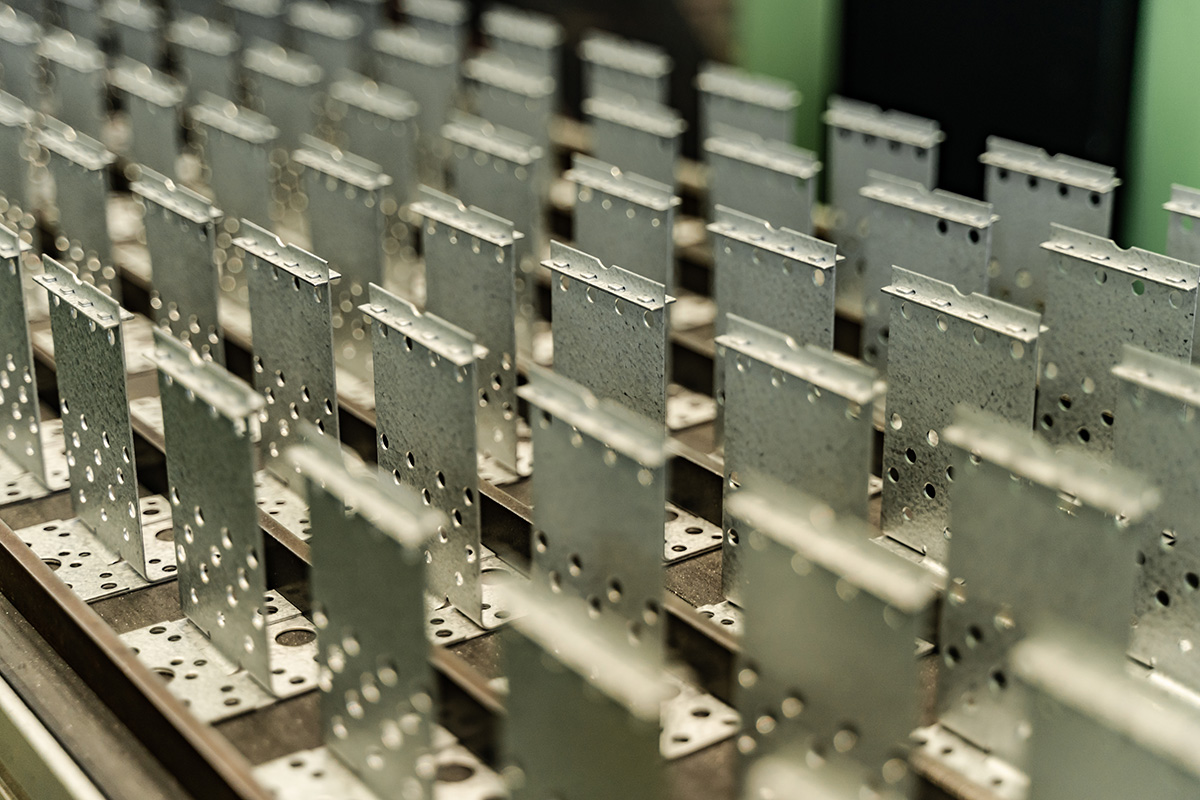
Aluzinc coated steel plate
The production of Kalzip E clips with overmolding
The Kalzip E clip is a standing seam roof clip molded from polyamide on an aluminium-zinc coated steel plate. This plastic layer provides a thermal insulation effect, preventing the formation of thermal bridges.
At our Budapest production site, Mikropakk SILVER, we have been overmolding 10 types of Kalzip E clips for more than 10 years, in 10 different sizes and finishes, with a total of around 1.2 million pieces produced each year. The combination of a metal insert and a thermoplastic overmold results in reliable, cost-efficient metal–plastic hybrid parts for roofing applications.
Why overmolding is ideal for Kalzip E clips
For Kalzip standing seam roofs, clips must combine high load-bearing capacity with minimal thermal bridging. Using overmolding on an Aluzinc coated steel insert provides:
- a strong mechanical connection to the roof system through the metal core,
- significantly reduced thermal conductivity compared to a full-metal clip, and
- a durable thermoplastic surface that supports roof panel movement without damaging the coating.
This makes the Kalzip E clip a robust, long-life solution for fixing roof system accessories and panels without penetrating the weatherproof layer.
Manufacturing and assembly of the metal part
The raw material, sheet metal, arrives in coils at our supplier, where the parts are prefabricated to shape and size.
The manufacturing of the product at Mikropakk starts with the use of these prefabricated parts, which are:
- Riveted,
- bent, and
- pressed
on our automated production line.
Key points of the metal part production:
- The automatic assembly machine is capable of producing all 10 types of Kalzip E clips.
- After assembly, the plate frame is checked for faults.
- Inspected products are placed in boxes and prepared for the overmolding process.
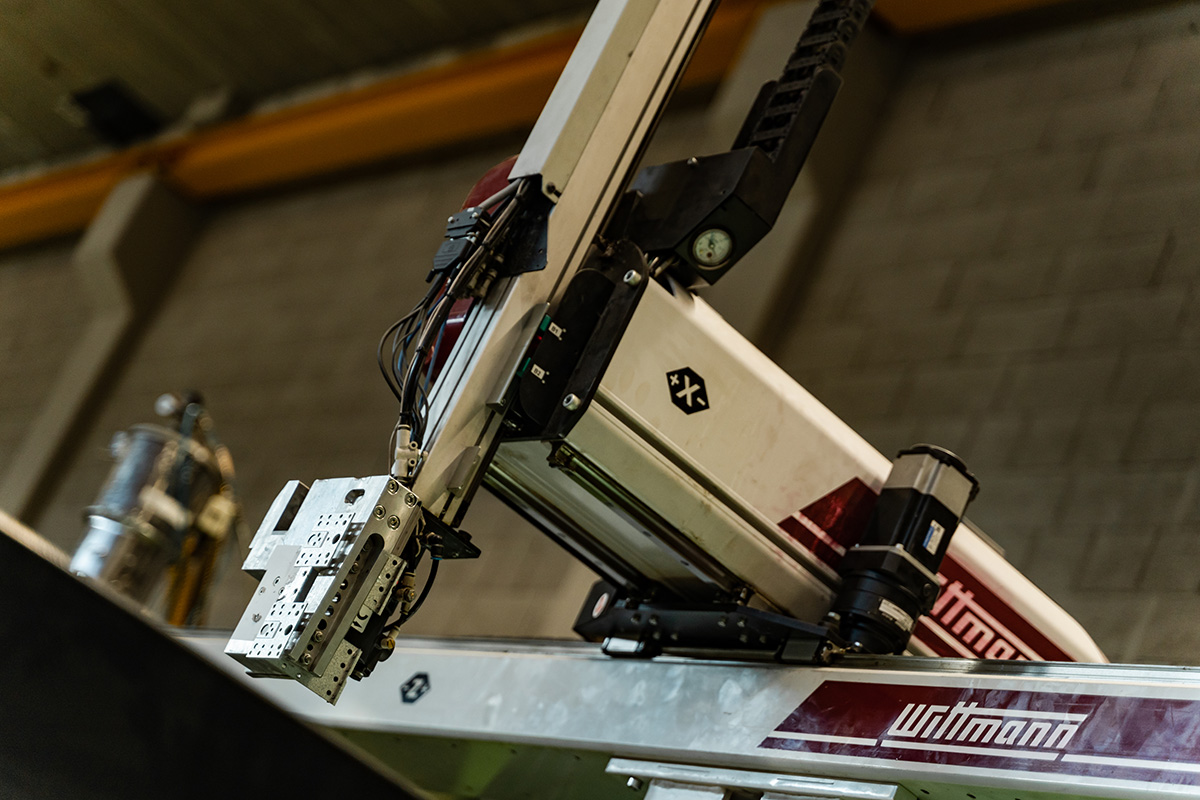
Optical inspection on a robotised production line
Fully robotised overmolding process and quality control
Operators place the finished metal frames on a conveyor rail, which transports the product to the robots. This cell functions as a dedicated overmolding line: metal inserts are fed, inspected, placed into the injection mold and overmolded with polyamide in a fully automated cycle.
Optical inspection was formerly performed by an operator but is now carried out on our robotic production line, which checks for:
- the presence of the head plate, and
- any deformations in the metal frame.
The robot then places the metal frame in the injection mold and, after overmolding, drops it onto the ejection slide. Machine vision checks confirm the presence and position of all critical features before and after overmolding, so only conforming metal–plastic hybrid parts move on to final inspection.
The process ends with a check carried out by an operator to ensure that only perfect quality products are delivered.
This fully robotised overmolding technology improves:
- process stability and cycle times,
- repeatability and dimensional accuracy, and
- inline quality control and traceability.
How we manufacture Kalzip clip products
Customised injection molding and overmolding solutions at Mikropakk
We offer injection molding and overmolding services at competitive unit costs for products with high technical specifications and new launches in both low-volume and high-volume production runs.
Our equipment is suitable for:
- 1-, 2- and 3-component injection molding,
- overmolding and insert molding,
- injection blow molding, and
- cubic technology.
We prefer a solution-oriented approach, which can include expanding our machine fleet if the production of a new product requires it.
For further examples of overmolding technology at Mikropakk, see our work on precision parts for electronics and other technical industry components, where overmolding and insert molding are used to integrate metal inserts and improve insulation and durability.
