
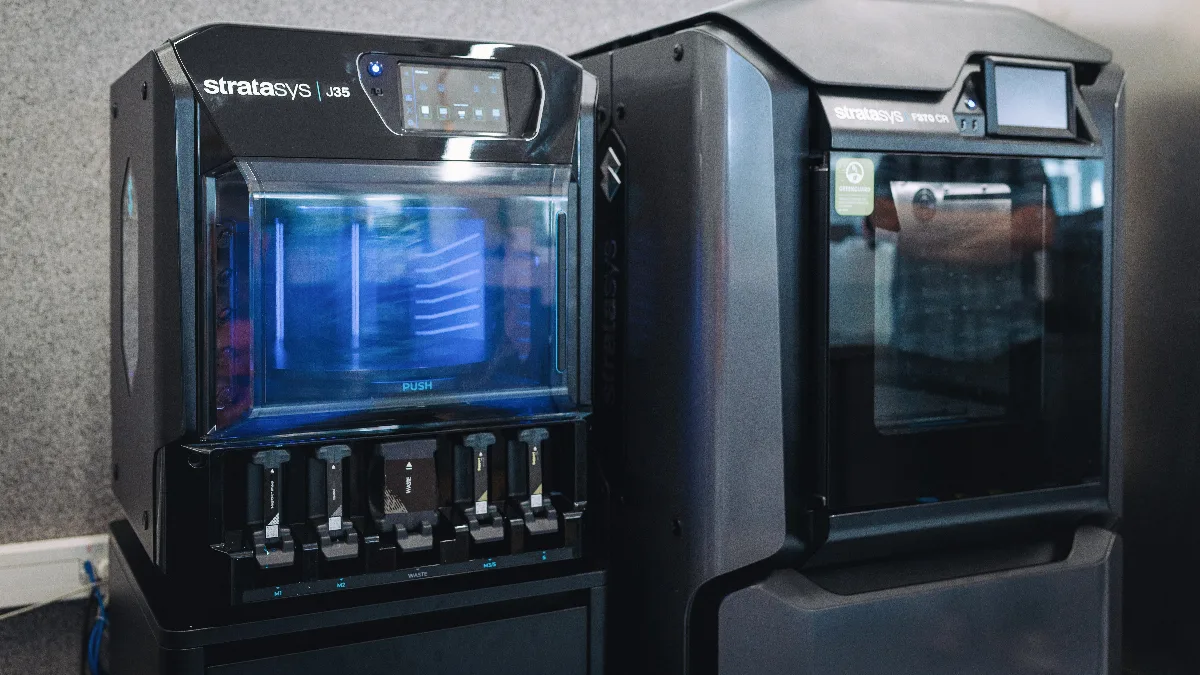
To make our product development process faster and more precise, Mikropakk’s R&D&I department has been expanded with a new workshop, two different 3D printers, the related post-processing equipment, and two climate chambers.
Faster development, more accurate testing and more flexible production support
With the new high-performance 3D printers, we can produce prototypes that closely resemble the final product in a much shorter time. These parts can also be tested in real installation environments, allowing us to respond faster to new requirements or design changes during development.
The 3D printers also allow us to produce special parts and tools for our own production equipment. This is especially useful when a manufactured product needs to be modified, as it can help reduce changeover time. At the same time, 3D printing also reduces the workload of our in-house tooling shop, further increasing our flexibility.
By putting the two climate chambers into operation, we can significantly reduce product testing time. The equipment allows us to assess, already during the development phase, how products are expected to behave over the years after production under different environmental conditions.
Faster in-house prototyping
With the new 3D printers, several steps of prototyping and production support can now be carried out in-house. This means physical samples can be produced faster, development decisions can be validated earlier, and modification requests can be handled within a shorter timeframe.
Stratasys J35 Pro – High-fidelity prototypes
The Stratasys J35 Pro uses multi-material PolyJet technology, making it suitable for producing detailed prototypes with high surface quality. It allows us to validate design, fit and usability questions on physical samples already in the early stages of development.
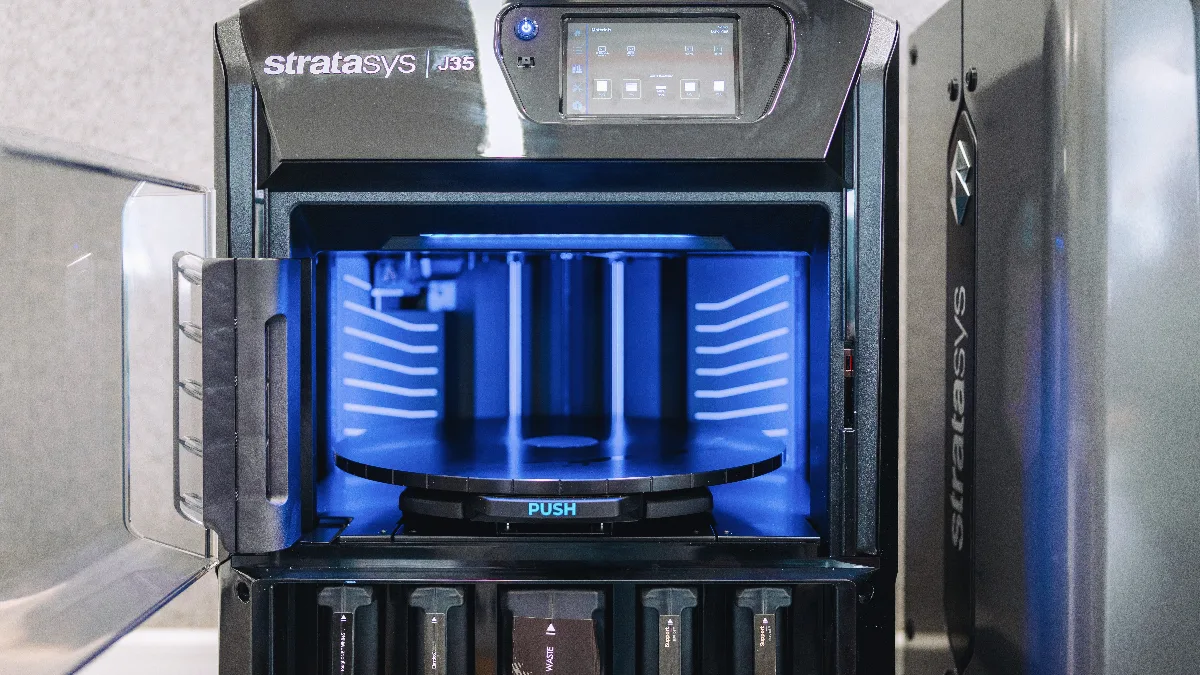
This is especially useful for packaging concepts, transparent or translucent parts, and prototypes intended for customer presentations. With high-fidelity samples, development directions can be compared faster, and necessary changes can be made before tooling begins.
Stratasys F370CR – functional parts and production aids with industrial FDM printing
The Stratasys F370CR is an industrial FDM printer designed for carbon-fiber composite and engineering-grade thermoplastic materials. It enables us to produce more durable functional parts, workholding fixtures, templates, jigs and production aids.
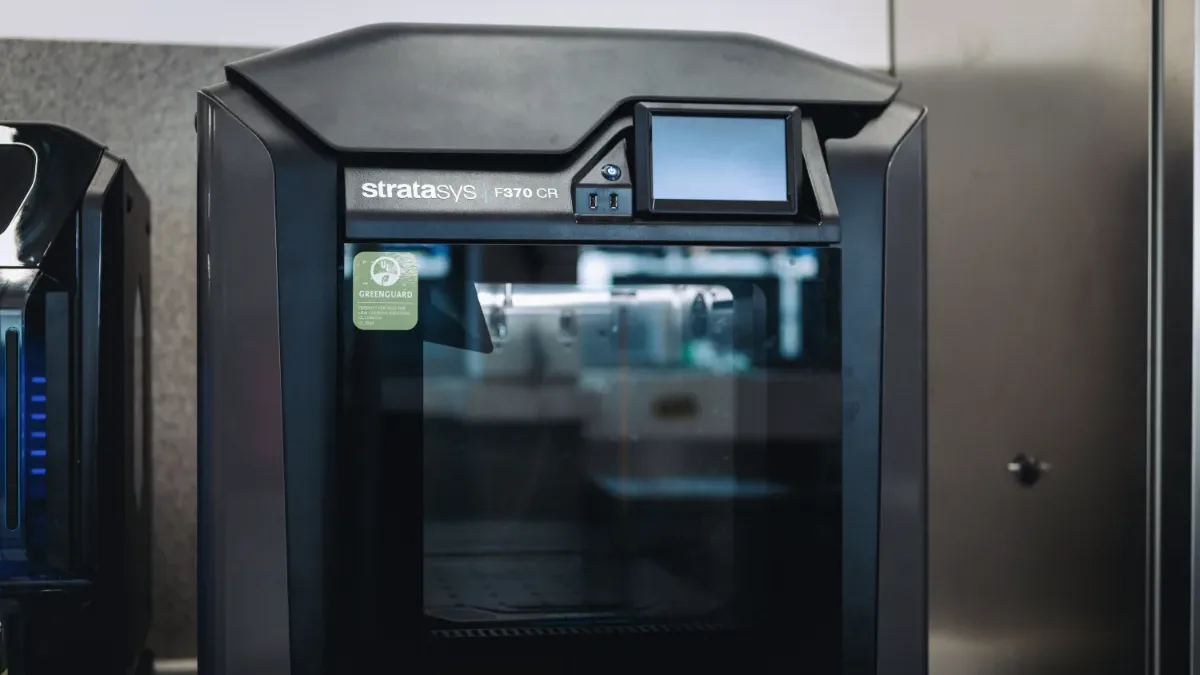
This allows faster reaction times when a product is modified, a production changeover is needed, or a custom part is required. 3D printing also helps reduce the workload of our in-house tooling shop, increasing flexibility in both development and production support.
PolyJet post-processing for better-looking physical samples
The Stratasys ProLight UV Curing Box and ProBleacher support the post-processing of PolyJet prints. They help improve the appearance of transparent and translucent prototypes, reduce yellowing, and produce cleaner, easier-to-evaluate samples for presentation purposes.
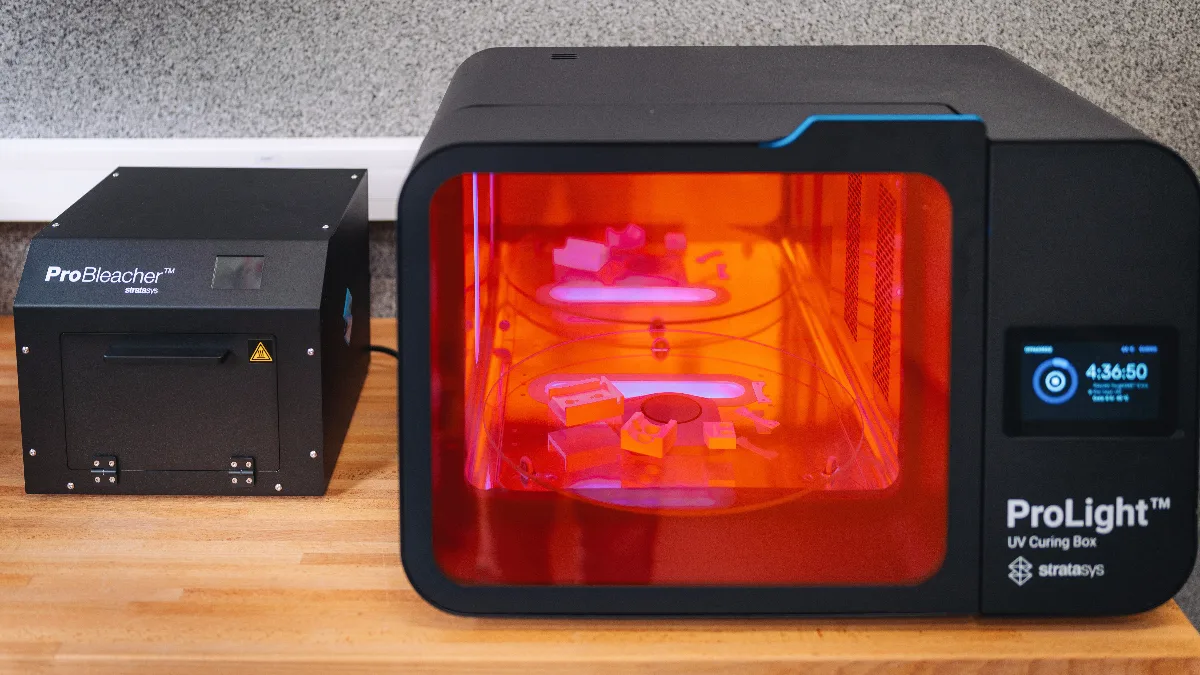
This is particularly important in developments where transparency, visibility of internal geometry or a surface finish close to the final product is relevant.
The Curing Box allows us to achieve the final required hardness of the printed part.
Faster environmental testing with two climate chambers
The two BioBase BJPX-HT400B climate chambers enable controlled temperature and humidity testing. They can be used to test injection-molded or 3D-printed samples, packaging prototypes and finished products under regulated environmental conditions.
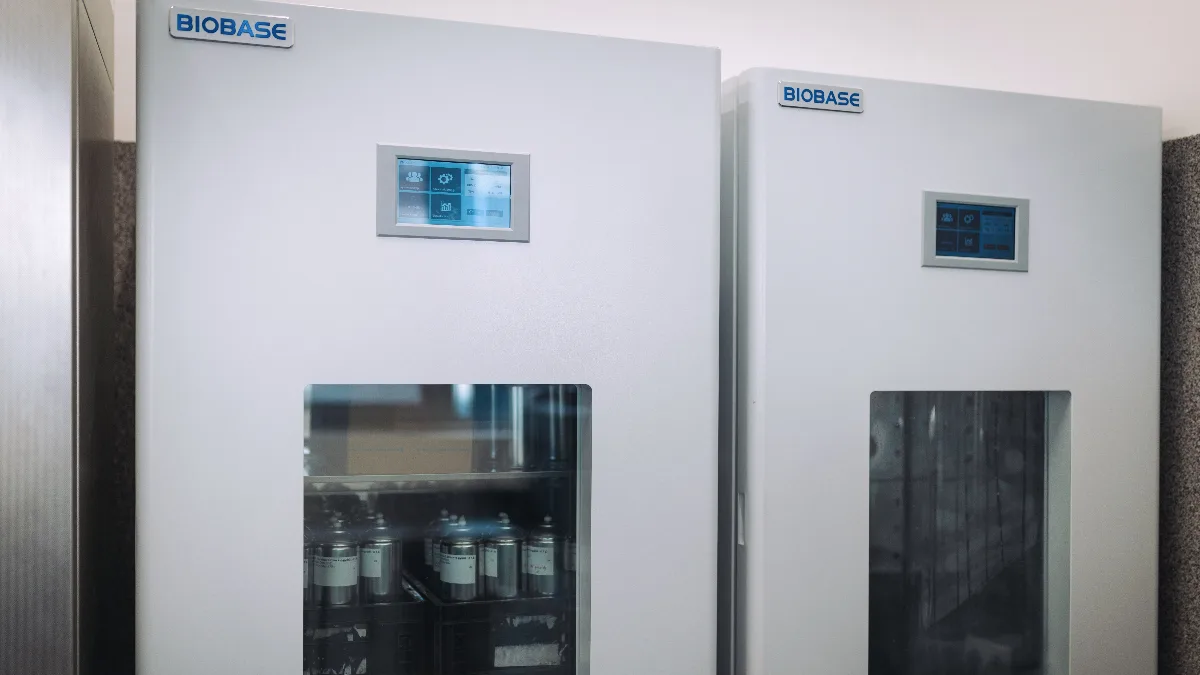
With these chambers, we can perform accelerated ageing and stability tests, helping us understand during development how a product may behave during long-term use or under different environmental loads. We can examine changes in material properties, fit, warpage, deformation and functional reliability.
Since two chambers are available, parallel tests can also be carried out. This reduces waiting time, speeds up internal validation, and supports better-informed development decisions before serial production begins.
Better-informed, faster development decisions for our customers
The new equipment is not important on its own. Its real value lies in the fact that more steps of the development and testing process can now be completed faster, more accurately and in-house.
For customers, this means shorter reaction times, better-informed development decisions, earlier issue detection and lower tooling risk. The investment clearly shows that Mikropakk creates value not only as a manufacturer, but also as a development partner.
Plan with Mikropakk
Involve us already in the early stages of development, so design, functional and material-related questions can be clarified before tooling begins. Get in touch with us.
